
Concrete tiles are made from cement and sand, usually painted or colour-coated, and are more porous. Terracotta tiles are fired clay, often with a glazed or natural finish, and hold colour through the tile. Concrete tiles take sealer and paint well. Glazed terracotta usually should not be painted.
How to tell them apart
| Check | Concrete | Terracotta |
|---|---|---|
| Colour | Surface paint or coating; grey inside a broken edge | Colour runs through; orange-red inside a break |
| Surface | Matte, textured, often chalky | Smooth, sometimes glazed and glossy |
| Weight | Heavier | Lighter |
| Sound when tapped | Dull | Ring or clink |
A broken tile is the best clue. Look at the cut edge. Grey cement means concrete. Orange or brown clay means terracotta.
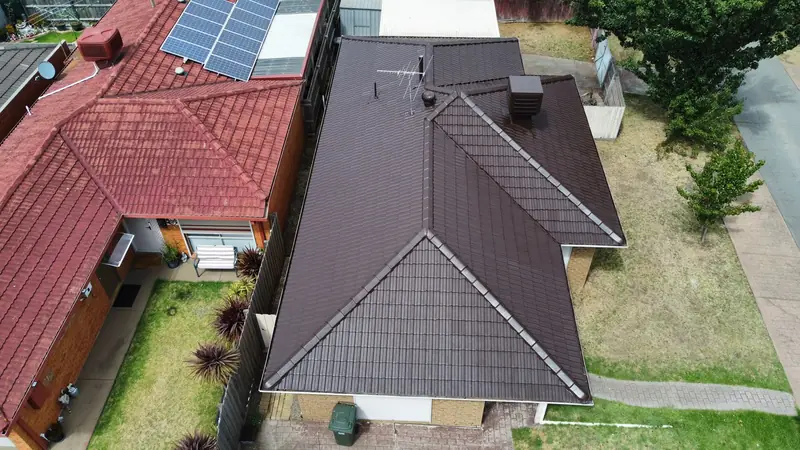
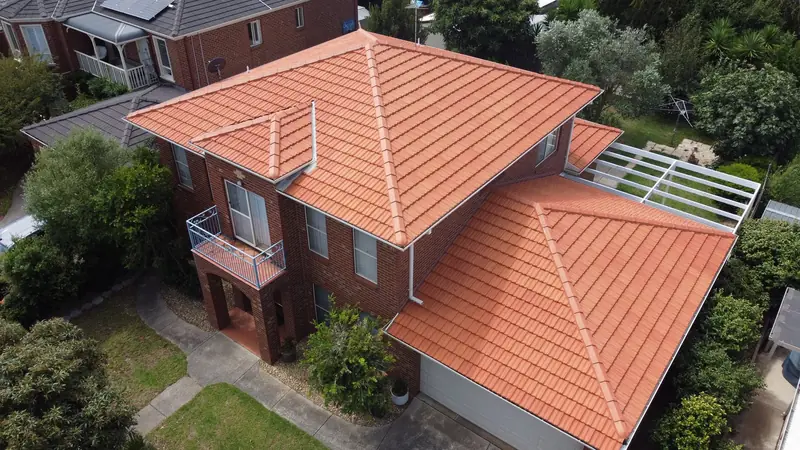
Concrete tiles
- Porous, so they hold moisture and grow moss in shade.
- The colour layer fades and chalks over the years.
- Take sealer and paint well, which is why restoration works well on them.
Terracotta tiles
- Colour lasts, because it runs through the clay.
- Glazed types shed water and hold paint poorly.
- The tiles stay sound for a long time. The pointing and bedding do the failing. See ridge capping repairs.
What this means for your job
- Faded concrete roof: repair, wash, seal and paint. See roof painting.
- Terracotta roof with cracked ridge: re-point or re-bed, clean, leave the tile finish as it is.
- Mixed or patched roof: a restoration brings it to one finish.
And metal roofs?
Colourbond and sheet metal behave differently again. See metal roof repairs.
A few more questions
Can all terracotta tiles be painted?
Glazed terracotta usually should not be. Unglazed terracotta can take sealer and paint. We check at the inspection.
Which tile type lasts longer?
Both can last decades. The pointing, bedding and paint wear out sooner than either tile.
Can I mix tile types when repairing?
We match the profile as closely as we can. A mismatch may show until the roof is painted.