
A roof leak follows rain: stains appear during or after wet weather, and dry out in dry spells. Condensation follows temperature: damp and drips appear on cold mornings, with mould on cold surfaces, whether it has rained or not. Check the pattern before you spend money.
Side by side
| Sign | Leak | Condensation |
|---|---|---|
| Timing | During or after rain | Cold mornings, cold spells, any weather |
| Location | Under a roof defect, along a ridge or valley | Across a cold surface, corners, under the roof |
| Look | Brown stain with a ring edge | Beads of water, black mould spots |
| Dry weeks | Dries out | Returns whenever it is cold and humid |
Leak causes
Cracked tiles, failed ridge pointing, rusted valleys, perished flashings and blocked gutters. See leak detection and repairs.
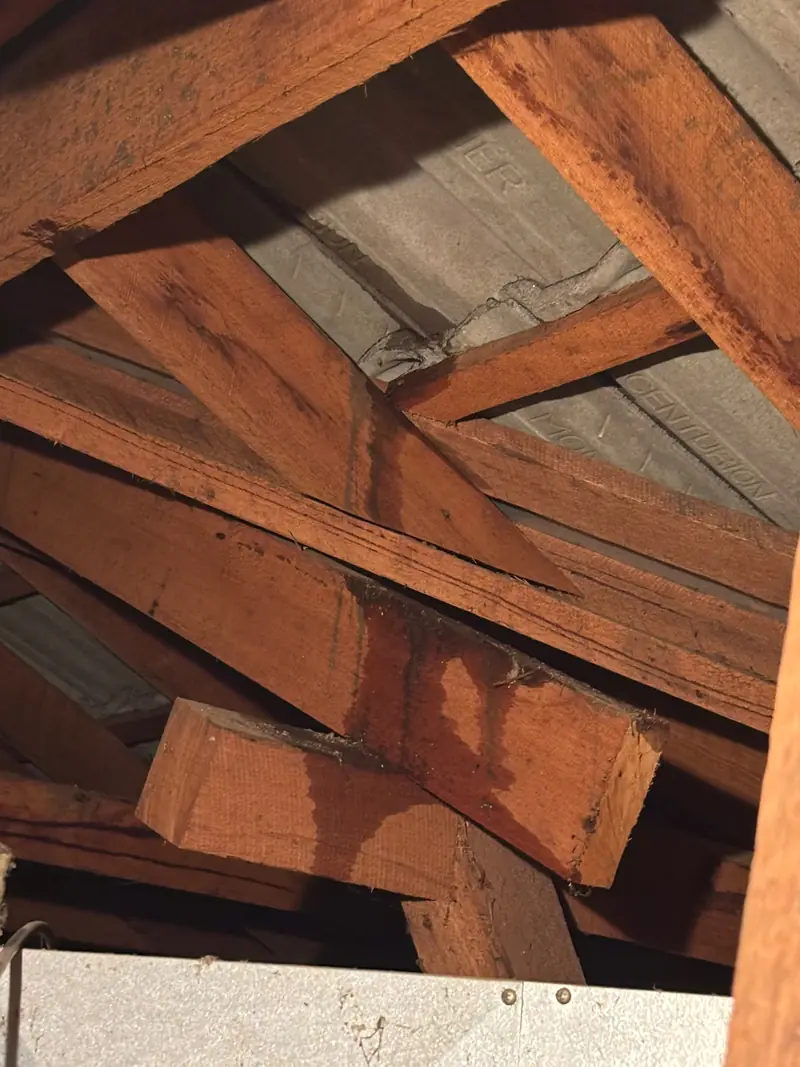
Condensation causes
- Moist indoor air from showers, cooking and drying clothes.
- Exhaust fans that vent into the roof space instead of outside.
- Poor roof ventilation, so humid air has nowhere to go.
- Cold roof surfaces, particularly on metal roofs without insulation or sarking.
What helps condensation
- Vent exhaust fans to the outside through a roof vent.
- Add roof vents or whirlybirds to move air through the roof space.
- Check insulation is in place and has not been compressed or soaked.
- Consider sarking when the roof is lifted for other work.
See whirlybirds, vents and sarking.
Can it be both?
Yes, and that makes it harder. A roofer should check the roof surface and the roof space together. Call 0430 545 669 and describe when the damp appears.
A few more questions
Why is my ceiling damp when it has not rained?
That points to condensation, a plumbing leak or a leak from earlier rain still draining. A roof inspection can sort out which.
Does a vent always fix condensation?
It helps, but the source of moisture matters too. Vent exhaust fans to the outside.
Can mould in the ceiling be harmful?
Mould can affect health and needs proper cleaning. Fix the moisture first, then clean.